 Clear
Wednesday, November 4, 2026 · Story 4 of 4
El-Sayed wins Michigan U.S. Senate seat
4 documented 3 unknown
What happened

Democrat Abdul El-Sayed defeated Republican Mike Rogers in Michigan’s open U.S. Senate race, major news organizations project. The seat opens after Sen. Gary Peters decided not to seek reelection; the Class II term ends January 3, 2027. The senator will represent Michigan’s 10.1 million residents for six years.
Who’s involved Abdul El-Sayed, Democrat projected winner of Michigan Senate seat; Mike Rogers, Republican defeated in Michigan’s open Senate race; Gary Peters, Senator who decided not to seek reelection
Why it matters
Michigan’s Class II senator casts votes for 10.1 million residents on federal legislation, treaties, and nominations for six years starting in January 2027. The outcome also shapes which party holds that Senate seat.
On the record
U.S. Sen. Gary C. Peters (D-MI) holds a Class II Senate seat whose term of service expires on January 3, 2027.
Documented · U.S. Senate · U.S. Senate
Article I, section 3 of the U.S. Constitution provides that senators serve six-year terms.
Documented · U.S. Senate Historical Office
Michigan’s Secretary of State lists November 3, 2026, as the state’s general election date.
Documented · Michigan Department of State
Michigan’s governor’s office said Senator Gary Peters decided not to seek re-election in 2026.
Documented · Michigan Executive Office of the Governor
10.1 million
Michigan total population
Still unknown
- Final certified statewide vote totals after the county and state canvass
- Whether any recount or election contest will be filed
- The exact date El-Sayed will take the oath of office
Sources
- U.S. Senate, Class II — Senators Whose Terms of Service Expire in 2027
- U.S. Senate, States in the Senate | Michigan Senators
- U.S. Senate Historical Office, About the Senate & the U.S. Constitution | Term Length
- Michigan Department of State, Bureau of Elections — Elections
- Michigan Executive Office of the Governor, Communications Division press release (Jan. 28, 2025)
How it’s sold
Why this is here: to show how stories get sold, so you can spot the moves yourself. The record sits next to every claim, and we never repeat the posts’ smears.
What people actually saw
About 14M views on the top posts about this. Under 1 in 10 were about the result.
just the result a narrative
Most-viewed post about the result
Democrat Abdul El-Sayed will become the nation’s first Muslim senator, a victory that also gives his party’s ascendant progressive wing evidence that far-left candidates can win competitive elections even in presidential battlegrounds like Michigan. 🔗:
Post: The Wall Street Journal (@WSJ) · about 132K views
Views on the top posts per narrative, as reported by X search at run time.
The fight, mapped
Vance has to swear him in
What the record shows
In his election-night remarks, El-Sayed said: “J.D., habibi, there is this delicious irony in the fact that you’re constitutionally obligated to swear me in in January.”
One side’s claim · CBS Detroit, full victory-speech transcript · C-SPAN, El-Sayed election-night remarks video
This part is a values argument. Whether the jab was earned payback or an unfit tone for a senator-elect is a values judgment facts cannot settle.
Top post: Clash Report (@clashreport) · about 8.2M views
The people beat AIPAC
What the record shows
In his victory speech, El-Sayed said: “To AIPAC, who spent $42 million against us, thank you for giving me the opportunity to beat you twice.”
One side’s claim · CBS Detroit, full victory-speech transcript
El-Sayed’s speech figure attributing a specific dollar total to AIPAC is his campaign claim; FEC itemizes independent expenditures by committee, including United Democracy Project.
One side’s claim · The National Telegraph · The Jewish Voice
This part is a values argument. Whether defeating outside pro-Israel spending equals a mandate against U.S. Israel policy is a values argument facts cannot settle.
Top post: Acyn (@Acyn) · about 3.6M views
An Islamist entered the Senate
What the record shows
Rogers and allies cited a 2012 letter El-Sayed signed during Egypt’s Arab Spring period and resurfaced social-media posts by his half-sister about family history; El-Sayed has denied personal and family ties and said he was not raised by his biological mother.
One side’s claim · Fox News · 60 Minutes
El-Sayed has publicly denied Muslim Brotherhood membership, including telling Fox News: “I have never been a member of the Muslim Brotherhood. I never will be a member of the Muslim Brotherhood.”
One side’s claim · New York Post · Fox News
This part is a values argument. Whether past family claims, a 2012 letter, and Israel criticism make El-Sayed a security risk is a values judgment beyond the public membership record.
Top post: Tommy Robinson 🇬🇧 (@TRobinsonNewEra) · about 375K views
Poll workers pushed El-Sayed
What the record shows
Michigan Compiled Laws § 168.744 restricts electioneering near polling places; O’Keefe Media presented undercover video as showing a poll worker directing a voter toward El-Sayed.
One side’s claim · James O’Keefe / O’Keefe Media Group post with undercover video
This part is a values argument. How much weight to give a single undercover encounter versus statewide certified results is a values judgment about election integrity evidence.
Top post: James O'Keefe (@JamesOKeefeIII) · about 196K views
Each narrative opens to what the record shows. We link to the posts; we don’t repeat their words.
The moment everyone saw
Abdul El-Sayed to JD Vance: JD, habibi, there is this delicious irony in the fact that you're constitutionally obligated to swear me in in January.
Post: Clash Report (@clashreport) · about 8.2M views
The clip shows
A short victory-speech excerpt of El-Sayed addressing Vance, with the crowd reacting, then typically cutting away.
The clip cuts
The full remarks also address Rogers (“you chose hate, and Michigan chose hope”), Trump (“call me Senator”), AIPAC, Palestinian children, and a longer domestic agenda including Medicare for All.
CBS Detroit, full victory-speech transcript · C-SPAN, El-Sayed election-night remarks video
Going around with no source
Posts say El-Sayed openly advocates putting Sharia into force as U.S. law, citing a 2022 CAIR Oklahoma banquet clip.
Unknown: no source found
The full 2022 CAIR Oklahoma keynote criticizes Oklahoma’s State Question 755 ban on courts considering Sharia and places it in a civil-rights history frame; the speech does not call for Sharia to replace U.S. law. PolitiFact review of Sharia-claim posts about the 2022 speech · Reuters Fact Check on distorted 2022 Sharia remarks
The claims are in our words. The original posts’ text is never shown here.
What they’re really fighting about
Did Michigan reject faith attacks or elevate a radical agenda?
Facts can settle
Facts can settle what El-Sayed said on election night, what FEC filings show about spending against him, what he has said about the Muslim Brotherhood, and how Senate oath practice works.
Facts can’t settle
Whether his progressive platform and Israel criticism make him fit for the Senate is for the reader to decide.
How the networks played it
Fox News
-
Technique · loaded language. The headline leads with mockery and gloating, so readers meet attitude before the election result.
Loaded · mocks (Casts the speech as ridicule aimed at opponents); gloating (Frames celebration as smug excess after the win); combative tone (Signals the result means conflict ahead in Senate)
Left out · Peters decided not to seek reelection; Class II seat term ends January 3, 2027
MS NOW
“El-Sayed defeats Rogers, holding a key Senate seat for Democrats”
Technique · misleading framing. The headline casts the outcome as Democrats holding a strategic prize, leading with party stakes over the open-seat facts.
Loaded · key (Elevates the seat as strategically vital for Democrats)
Left out · Peters decided not to seek reelection; Class II seat term ends January 3, 2027
X (most engaged, last 24h)
Post: Wu Tang is for the Children (@WUTangKids)
Technique · nut-picking. It lifts one personal jab from the speech and treats that moment as the story of the race.
Post: Dr. Abdul El-Sayed (@AbdulElSayed)
Technique · loaded language. The win is told as hope defeating hate and money, so readers absorb a moral verdict with the result.
2 more
Post: The Wall Street Journal (@WSJ)
Technique · loaded language. Calling the winner far-left and an ascendant wing’s proof point steers readers toward a faction fight reading.
Post: NBC News (@NBCNews)
Technique · loaded language. Calling it a victory for progressives steers the result into a faction win before the open-seat basics.
Left out by most of what people saw
Peters decided not to seek reelection
Class II seat term ends January 3, 2027
How it works
How U.S. Senate elections work
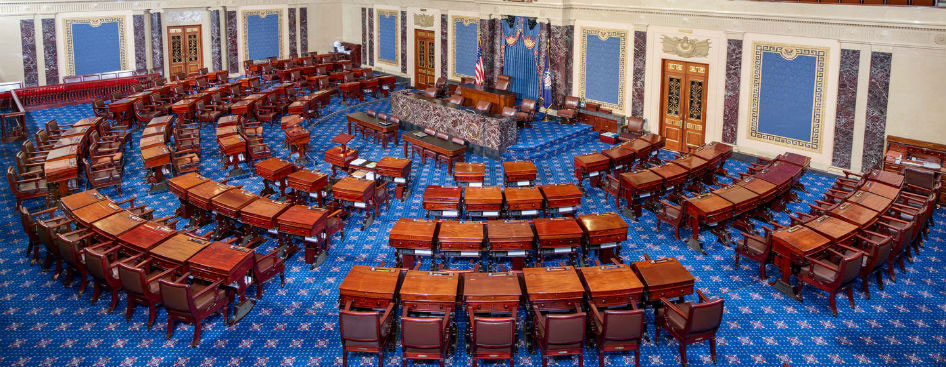
Voters in each state choose two U.S. senators for six-year terms. About one-third of seats are on the ballot every two years. The FEC listed 685 Senate candidates for 2026.
Key concepts
- Seventeenth Amendment
- Ratified in 1913, it requires that U.S. senators be elected by the people of each state rather than chosen by state legislatures. National Archives · U.S. Senate, Landmark Legislation
- Senate classes
- Article I, Section 3 divides senators into classes with staggered terms so only part of the Senate faces election in any cycle. U.S. Constitution · Vermont Secretary of State, General Election
- Elections Clause
- Article I, Section 4 lets each state prescribe the times, places, and manner of Senate elections; Congress may alter those regulations by law. U.S. Constitution
- Equal Senate representation
- The Constitution gives every state equal Senate representation regardless of population, and each senator casts a vote. U.S. Constitution · National Archives, 17th Amendment text
How it works
Each state has two senators, elected by the people for six-year terms, and each senator has one vote.
Seats are divided into three classes so that one-third of the Senate is chosen every two years.
States set the times, places, and manner of Senate elections; Congress may alter those rules by law.
A senator must be thirty years old, a citizen for nine years, and an inhabitant of the state when elected.
Candidates who raise or spend more than $5,000 must register with the FEC; national party Senate committees reported $216.4 million and $237.8 million in 2026-cycle receipts.
How we got here
- 1866
Congress enacts a law setting uniform procedures for state legislatures to elect senators.
- 1914
The first nationwide popular elections for U.S. Senate seats are held.
- 1972
The Federal Election Campaign Act takes effect, requiring disclosure for Senate and other federal candidates.
- May 1995
The Supreme Court holds that states cannot add qualifications for senators beyond those in the Constitution.
What it means
Equal state suffrage means every state has the same Senate voting power regardless of population.
Equal Representation of States in the Senate (Constitution Annotated)
Because seats are staggered, only a portion of the Senate turns over in any election, and the chamber continues across Congresses.
People eligible to vote for a state’s most numerous legislative chamber are eligible to vote for that state’s senators.
State law decides whether a governor may appoint a temporary senator until voters fill a vacancy.
U.S. Const. amend. XVII (Constitution Annotated) · U.S. Senate
What the data shows
685
FEC-listed Senate candidates with 2026 election year
$216.4 million
DSCC total receipts in the 2026 election cycle
$237.8 million
NRSC total receipts in the 2026 election cycle
Sources
- U.S. Const. amend. XVII (Constitution Annotated)
- U.S. Const. art. I, § 3, cl. 2 — Staggered Senate Elections (Constitution Annotated)
- U.S. Const. art. I, § 4, cl. 1 — Congress and Elections Clause (Constitution Annotated)
- U.S. Const. art. I, § 3, cl. 3 — Overview of Senate Qualifications Clause (Constitution Annotated)
- FEC, Registering a candidate
- Federal Election Campaign Act of 1971, as amended (govinfo COMPS-985)
- U.S. Senate, About Electing and Appointing Senators
Get the edition by email, the morning it’s published.
Free. Unsubscribe anytime. Or read it in the app: 